
 EN
EN

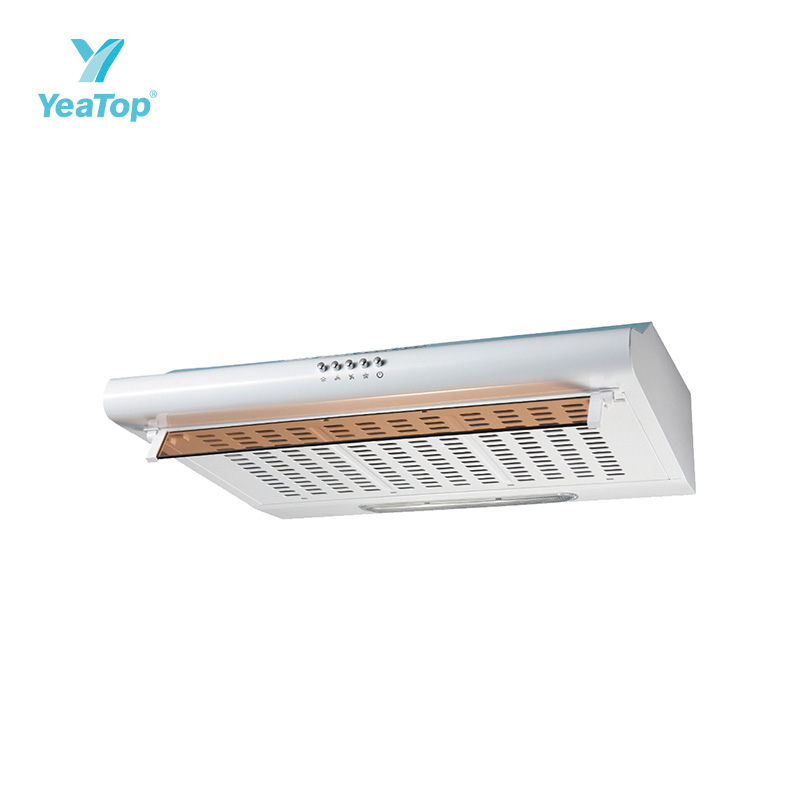
In the modern home, kitchen ventilation is no longer an afterthought—it has become the defining standard for indoor air quality, environmental sustainability, and low-noise architectural living. For B2B buyers, global sourcing managers, property contractors, and commercial appliance distributors, selecting the right
The Evolution of Kitchen Ventilation Powerplants
For decades, the global range hood industry relied heavily on shaded-pole or permanent split capacitor AC motors wound with aluminum or mixed-alloy wiring. While these legacy configurations provided adequate air displacement during initial deployment, long-term field performance data reveals that they suffer from substantial electrical impedance and progressive thermal degradation. Traditional AC systems convert a large portion of consumed electrical wattage directly into waste heat rather than mechanical rotational force. Over years of daily home cooking involving heavy oil fumes and moisture, this continuous internal thermal stress degrades winding insulation, accelerates bearing lubricant breakdown, and leads to persistent, annoying motor hum.
The integration of BLDC technology addresses these structural vulnerabilities at the fundamental physics level. By utilizing electronic commutation via intelligent printed circuit board assemblies (PCBA) instead of physical carbon brushes, BLDC propulsion eliminates mechanical friction, sparking, and mechanical wear entirely. When this continuous electronic driver operates alongside high-density pure copper stator windings, the overall mechanical output efficiency spikes dramatically. The result is an eco-friendly range hood that effortlessly clears high-static-pressure ducting networks while drastically reducing line-voltage electrical consumption.
Why Pure Copper Winding Superiority Matters
Material selection inside the motor housing dictates both the operational lifespan and overall energy efficiency profile of any kitchen ventilation appliance. Fundamental electrical engineering principles confirm that pure copper possesses a vastly superior electrical conductivity coefficient compared to cost-reduced aluminum alternatives. In practical terms, this lower resistivity means electricity flows through the motor coils with far less resistance, preventing the excessive heat accumulation that plagues low-cost ventilation equipment.
During rigorous environmental chamber testing, elevated ambient temperature runs, and high-humidity performance cycles, copper-wound motors demonstrate remarkable thermal stability and resistance to wire oxidation. Aluminum wires tend to expand and contract significantly under rapid thermal cycling, which causes micro-fractures in insulation coatings over time and increases the risk of short circuits. Pure copper maintains its structural integrity and magnetic permeability under continuous high-load operations. For global importers, project procurement managers, and private-label OEM brands, specifying pure copper BLDC motors drastically reduces warranty claims, prevents premature motor failure, and upholds product reliability across diverse climatic regions.
Acoustic Physics and Precision Airflow Control
One of the most persistent complaints from residential homeowners regarding traditional kitchen exhaust systems is noise pollution. High-decibel motor rumble and harsh vibration frequently deter users from utilizing proper fan speeds while cooking, resulting in lingering grease particles, moisture buildup, and compromised indoor air quality. The acoustic performance of a BLDC copper motor offers an elegant engineering solution to this widespread consumer pain point.
Standard AC motors are constrained to fixed pole configurations, meaning speed adjustments occur through abrupt voltage stepping that generates internal electromagnetic resonance and turbulent air shear. In contrast, BLDC systems utilize pulse-width modulation (PWM) and continuous digital inverter control. This enables true stepless speed regulation, allowing the range hood to fine-tune impeller rotations precisely according to current cooking demands. By maintaining smooth aerodynamic velocity without sudden torque spikes, BLDC-powered range hoods operate under 50 decibels during standard extraction modes. Kitchen environments remain quiet, refined, and comfortable without sacrificing high static pressure performance against long external duct runs.
Economic Impact and Supply Chain Considerations
From a commercial viewpoint, transitioning product lines to high-efficiency BLDC copper motor range hoods delivers tangible financial and sustainability advantages across the entire supply chain. End users benefit directly from reduced monthly electricity utility bills, as BLDC systems consume up to 50% less power than traditional AC counterparts while delivering equivalent or superior CFM airflow metrics.
For wholesale distributors, commercial real estate developers, and OEM/ODM brand partners, offering BLDC-equipped range hoods satisfies increasingly stringent international energy efficiency benchmarks, including European Union eco-design directives, ERP regulations, and North American Energy Star criteria. Sourcing appliances backed by advanced brushless copper technology protects brands against regulatory obsolescence and elevates product positioning into premium market tiers with higher retail margins.
Building World-Class Kitchen Appliances
Delivering reliable, whisper-quiet, and energy-efficient kitchen ventilation requires specialized manufacturing expertise, advanced machinery, and rigorous quality assurance protocols. State-of-the-art production facilities equipped with automated precision copper winding stations, dynamic rotor balancing systems, and multi-stage acoustic testing chambers ensure every motor assembly meets stringent international safety and performance standards. By integrating pure copper BLDC technology into comprehensive